Texas Vineyards and Pruning
Texas vineyards are unique in the wine world since those vineyards along the Gulf Coast contain hybrid grapes and those further inland contain the classic wine grapes. As a result, Texas vineyards have two different approaches toward growing grapes. The vineyards along the Texas Gulf Coast has mild winters along with humid Summer days with warm night temperatures. In addition, grape vines have the equivalent of a mosquito which is called the glassy winged sharpshooter. This insect is so ugly only its “mother” could love it. The glassy winged sharpshooter is prevalent along waterways, creeks, rivers, and lakes. When it “bites” the vine, it is searching for the vines’ xylem aka blood vessels where the sweet sap is. Each bite into the vine sucks some of the sap out of the vine and injects a bacterium which multiplies and eventually plugs the flow of sap in the xylem. When enough xylem is plugged, the vine dies since the roots and leaves can no longer communicate. This disease is called Pierce’s disease and is fatal to vitis vinifera. The Gulf Coast weather is not conducive to growing the vitis vinifera so hybrid grapes like Blanc du Bois are grown which produce grapes in the humid weather of the Gulf Coast while tolerating the warm night temperatures. This hybrid grape is somewhat resistant to the bacterium. All grapes are susceptible to mold so organic fungicides are used to an exceptionally large extent in the Gulf Coast area.
The classic wine grapes aka vitis vinifera require cool night temperatures such as in the mid-fifties to mid-sixties.
As a result, Texas has two distinct grape growing zones, being Gulf Coast and inland areas. The grapes along the Gulf Coast start their bud breaks in mid-February to mid-March while the inland grapes have bud breaks from mid-March to the first week of May. As a result, grape harvests also occur at different times with Gulf-Coast grapes being harvested in mdi-June to mid-July. The vitis vinifera grapes are harvested from the first part of August to the end of September in Texas. Since there are thousands of vitis vinifera grape varietals, the skin thicknesses vary from thin to thick skins and hence have differing lengths of time toward maturity.
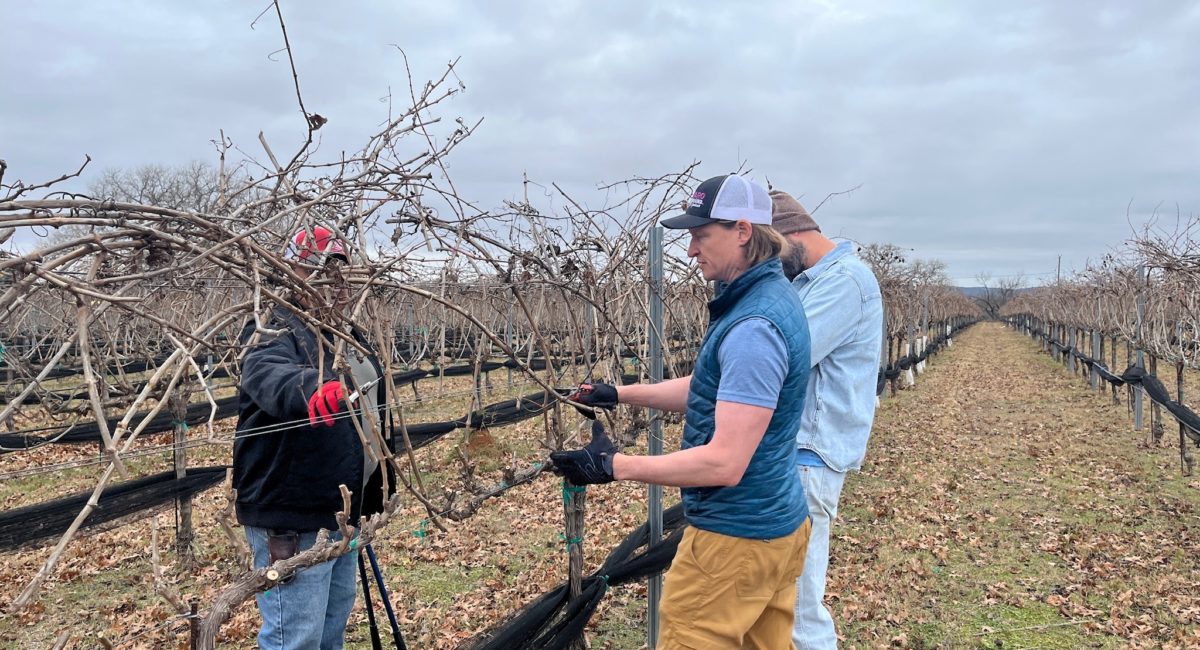
Vineyard pruning is starting along the Gulf Coast now. The purpose of pruning is multi-fold with type of pruning methods based on:
• Establishing grape bunches for harvesting at chest-height which is an easy height at which to harvest grapes.
• Removal of dead wood and areas of the vine which if left unattended could cause the vine to not be sustainable on a long-term basis.
• Limiting grape production on each vine to the level that the vine’s root system can fully sustain quality grape production. In most cases, this means limiting grapes production to three to six tons per acre each year, depending on grape varietal. Certain vineyards are not pruned to limit grape production and can bring in over 30 tons of grapes per acre each year. Those are the grapes used for the production of flimsy, cheap wines.
• Providing a structured vine which can produce quality grapes for decades.
Grape vines are based off a main trunk with an arm off to the side at the four-foot height. In some vineyards, there are arms to each side of the trunk. Each vineyard manager has his own philosophy of vine pruning with such philosophies based on personal experiences. Meticulous notes/diaries are kept by vineyard managers dealing with vineyard age, weather, soil conditions, varietal and more for the vineyard manager to review and modify his pruning methods to produce even better-quality fruit at magnitudes that make the vineyards money.
There are two local vineyards in the Houston area that allow the public to enter their vineyards to prune. Wild Stallion Winery in north Harris County and Bernhardt Winery near Plantersville have a “crash course” on pruning on a Saturday morning followed by a morning of pruning. These pruning “Saturdays” are yet to be scheduled so look at their webpages for scheduled pruning. You can take the cane cuttings with you to make wreaths of woven vines or you can start you own grape vines off these cuttings by dipping the bottom end of a “seven-bud cutting” into a rooting hormone and then planting in soil to root.